

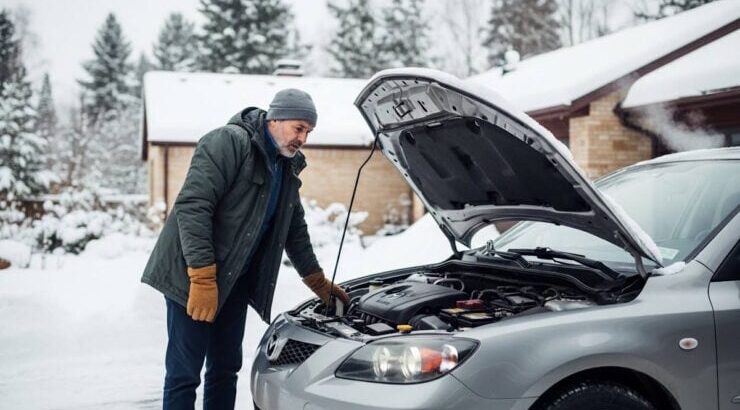
An automobile is a sophisticated integration of mechanical, chemical, electrical, and structural systems. Each component is engineered to operate within optimal parameter thresholds. However, vehicles rarely experience perfect conditions indefinitely. Instead, they are subjected to continuous environmental stress as seasonal weather patterns change across the year. From the extreme sub-zero temperatures of winter to the intense thermal loads of mid-summer, atmospheric conditions exert continuous influence over how an automobile functions.
Failing to understand the physical impacts of changing seasons on mechanical components leads to unexpected mechanical failure, degraded efficiency, and severe safety liabilities on public roadways. Examining the specific scientific interactions between climate elements and vehicular architecture reveals how routine seasonal transitions dictate real-world safety parameters.
Winter Dynamics Cold Extremes and Musculoskeletal Friction
Winter weather introduces the most severe physical challenges an automobile must confront. Sub-zero temperatures radically alter the physical properties of essential fluids, electrical components, and elastomeric polymers.
The Physics of Battery Efficiency Loss
Lead-acid and lithium-ion batteries rely on internal chemical reactions to release free electrons and generate an electrical current. Cold ambient temperatures slow these chemical reactions down significantly. At freezing temperatures, a conventional car battery loses roughly twenty to thirty percent of its maximum cranking electrical capacity. If the temperature drops below zero degrees Fahrenheit, that electrical output can decline by fifty percent or more.
Simultaneously, the mechanical load on the starting system escalates. As internal engine oils cool, their viscosity rises, transforming free-flowing lubricants into thick, sludge-like fluids. The starter motor must expend far more electrical energy to turn the crankshaft through this thick fluid layer, drawing heavily from an already weakened battery cell, which frequently results in starting system failure.
Tire Pressure Deflation and Traction Loss
Tires are the single contact interface between a moving vehicle and the road surface, meaning their performance dictates all braking and steering metrics. The air inside a tire follows ideal gas laws, where pressure is directly proportional to absolute temperature. For every ten-degree drop in ambient Fahrenheit temperature, internal tire pressure declines by approximately one pound per square inch.
Driving on underinflated tires causes several distinct safety hazards:
-
Tread Distortion: The tire footprint flexes abnormally, pulling the center tread away from the road pavement and reducing the available stopping surface area.
-
Accelerated Sidewall Wear: Excessive flexing generates intense internal friction, weakening the structural tire plies and elevating the risk of a high-speed blowout.
-
Reduced Hydroplaning Resistance: The altered tread shape cannot effectively channel water, slush, or melting ice away from the path of travel.
Furthermore, standard summer or all-season rubber compounds harden considerably when temperatures drop below forty-five degrees Fahrenheit. The stiffened tread loses its macro-micro flexibility, preventing it from interlocking with microscopic road textures, which severely extends stopping distances even on dry asphalt.
Summer Thermal Loads and Fluid Volatility
While winter challenges starting mechanisms and rubber flexibility, summer weather tests the thermodynamic limits of a vehicle’s cooling and friction-management networks.
Cooling System Stress and Cavitation Risks
The primary objective of an internal combustion cooling system is to dissipate the intense thermal energy produced during cellular fuel combustion. In summer, when ambient track temperatures regularly surpass one hundred degrees Fahrenheit, the temperature differential between the engine metal and the surrounding atmosphere decreases, reducing natural heat transfer efficiency.
The cooling network must operate at maximum fluid pressure to elevate the boiling point of the water-glycol mixture. If the radiator cap seal fails or the structural coolant volume is low, the fluid will boil prematurely, forming localized gas pockets around the cylinder heads. This condition triggers rapid overheating, warped engine heads, and catastrophic head gasket failure.
Accelerated Brake Pad and Rotor Degradation
Brake systems slow a vehicle by converting moving kinetic energy into heat energy through mechanical friction between the brake pads and the iron brake rotors. During intense summer heat, this heat dissipation pathway is compromised. Continuous, heavy braking down long hills or in congested urban traffic raises brake component temperatures above their engineered design limits.
This thermal overload causes a phenomenon known as brake fade. The binding resins inside the brake pads begin to break down under extreme heat, releasing volatile gases that form a thin, microscopic film between the pad and the rotor surface. This gas layer acts as a lubricant, preventing direct mechanical contact, resulting in a spongy brake pedal feel and a critical extension of total stopping distance.
Spring and Autumn Transitional Volatility
The intermediate seasons present localized, highly dynamic hazards that frequently catch drivers unprepared because their effects are less visible than winter snow or summer heat waves.
Spring Rain and Hydroplaning Mechanics
Early spring weather routinely brings intense rain patterns that flood road surfaces. When a tire encounters a sheet of standing water, the tread channels must physically displace that water away from the tire footprint to maintain asphalt contact.
If the depth of the water exceeds the depth of the tire grooves, or if the vehicle’s speed is too high, the tire cannot clear the fluid volume quickly enough. A wedge of high-pressure water builds up in front of the tire tread, lifting the entire rubber structure off the road surface. The vehicle enters a state of hydroplaning, floating entirely on a fluid film, which removes all driver control over steering and braking mechanisms.
Autumn Leaf Accumulation and Road Lubricity
Autumn brings structural changes to road textures through falling foliage. When tree leaves accumulate on roadways and mix with light atmospheric moisture, they undergo chemical breakdown, releasing natural starches and organic compounds.
This mixture creates a highly slick, dark paste that settles into the microscopic crevices of the asphalt pavement. The resulting road condition features a coefficient of friction equivalent to packed winter ice. Drivers entering a shaded curve covered in wet foliage often experience sudden, unexpected traction loss if they enter the curve with excessive lateral speed.
Frequently Asked Questions
What is the mechanical difference between all-season tires and dedicated winter tires?
All-season tires use a firmer rubber compound engineered to maintain structural shape in hot summer weather, but this compound hardens and loses grip when temperatures drop below freezing. Dedicated winter tires are manufactured using high-silica rubber matrices that remain flexible in sub-zero weather, combined with deep tread patterns and hundreds of microscopic slits called sipes that physically bite into packed snow and sheet ice to maintain traction.
Why does a vehicle’s fuel efficiency drop noticeably during cold winter months?
Winter fuel efficiency drops due to multiple compounding mechanical factors. Cold engine oil increases internal mechanical friction, requiring more energy to move internal components. Additionally, colder air is significantly denser than warm air, which increases aerodynamic drag on the vehicle body and prompts the engine management software to inject more fuel to maintain the correct air-fuel combustion ratio.
How does high summer humidity alter the performance of an air conditioning system?
High atmospheric humidity forces an automotive air conditioning system to work significantly harder because it must remove massive volumes of airborne water vapor before it can effectively lower the air temperature. The air conditioning compressor remains engaged for prolonged windows, placing a continuous mechanical load on the engine accessory belt, which reduces available horsepower and drops overall fuel economy.
What is black ice and why is it exceptionally dangerous for highway safety?
Black ice refers to a highly transparent, ultra-thin layer of smooth ice that forms over dark asphalt roadways, usually when light rain or melting snow freezes rapidly as ground temperatures drop below thirty-two degrees Fahrenheit. Because the ice contains no trapped air bubbles, it remains completely invisible to the driver, appearing simply as a harmless wet patch on the road until a vehicle attempts to execute a lateral steer or sudden brake application.
How does intense summer heat affect the longevity of low-profile tires?
Low-profile tires feature short, stiff sidewalls and hold smaller volumes of internal air compared to standard tires, making them highly sensitive to temperature fluctuations. Intense summer heat raises internal tire pressures rapidly during high-speed highway driving, causing the center tread to bulge slightly. This expansion drives accelerated uneven tread wear along the middle centerline while increasing the risk of structural casing separation when hitting unexpected highway potholes.
Why do rubber windshield wiper blades degrade faster during seasonal transitions?
Windshield wiper blades are made of natural or synthetic rubber compounds that are highly vulnerable to ultraviolet solar radiation and extreme thermal cycling. Summer heat dries out the elastomeric components, causing the rubber edge to become brittle and develop micro-cracks. When winter cold arrives, the hardened, brittle rubber cannot flex smoothly against the curved glass surface, resulting in severe streaking and compromised driver visibility.